Khasi ko Masu (Nepali Goat Curry, Dashain Special)
Khasi ko Masu, slow-cooked Nepali goat curry, the centerpiece of Dashain feasts. Bone-in goat in a deep mustard-oil masala finished with timur and ghee.
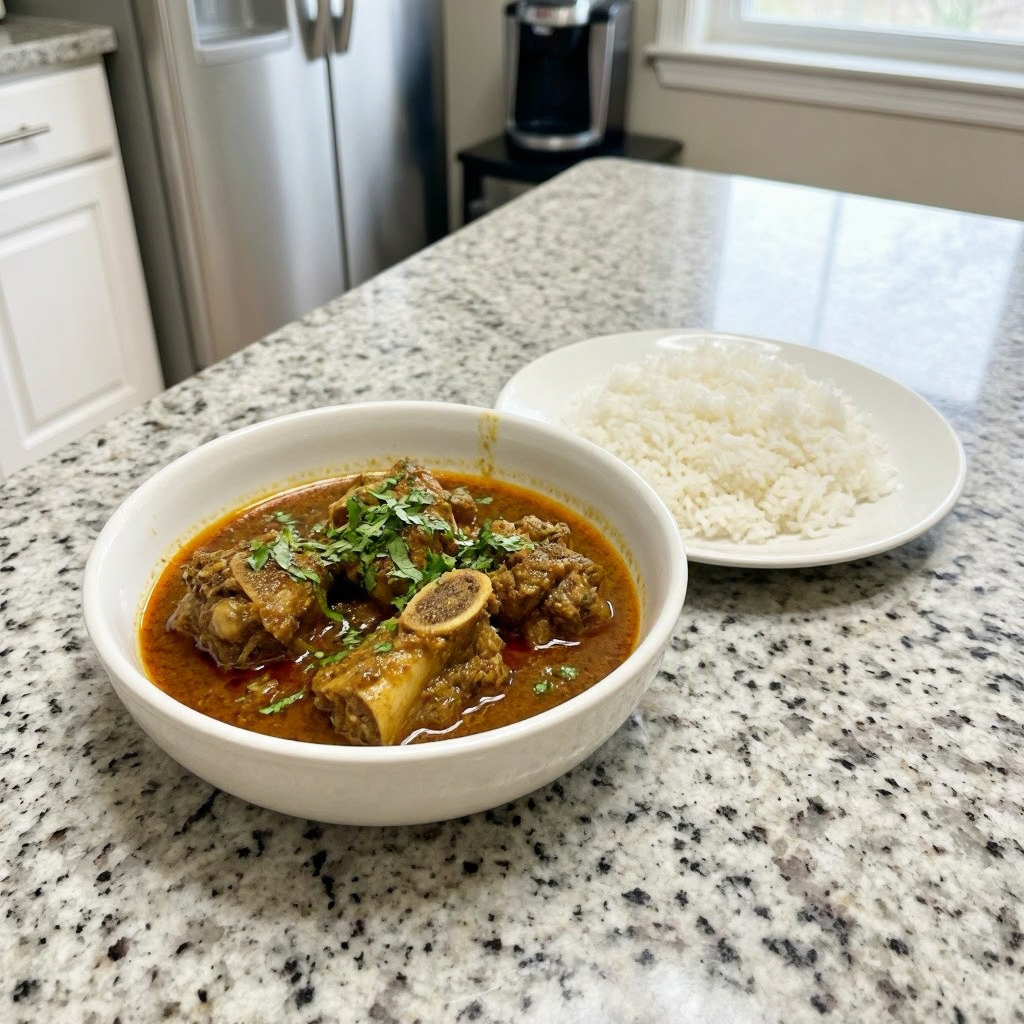
There is no dish more important to Nepali celebration than khasi ko masu. During Dashain, the longest and most important festival of the year, almost every household will have a heavy pot of goat curry simmering through the afternoon, the smoke from caramelizing onions drifting out of every kitchen window in the valley. As children we would wait for the moment our father lifted the lid for the first time and the whole house would fill with the smell of mustard oil, ginger, and slow-cooked meat. The first bowl always went to the elders, the next to us, and the last, the most prized, was the broth poured over rice for the cook.
This is not a quick weeknight curry. It is a deliberate, slow recipe that rewards patience: yogurt-marinated goat, deeply caramelized onions, a long simmer, and a final flourish of timur and ghee. Make it for Dashain. Make it for guests. Make it on a Sunday afternoon when you want your house to smell the way home should smell.
Ingredients
For the marinade
- 1 kg bone-in goat meat (khasi), cut into 2-inch curry pieces (shoulder and ribs are ideal)
- 1/2 cup plain yogurt
- 1 tablespoon ginger-garlic paste
- 1 teaspoon turmeric powder
- 1 teaspoon salt
For the curry
- 4 tablespoons mustard oil
- 4 green cardamom pods
- 4 cloves
- 1 (2-inch) cinnamon stick
- 2 bay leaves (tej patta)
- 1 teaspoon cumin seeds
- 3 large onions (about 600 g), thinly sliced
- 2 tablespoons ginger-garlic paste
- 2 medium tomatoes, finely chopped (or 2 tablespoons tomato paste)
- 1 teaspoon ground coriander
- 1 teaspoon ground cumin
- 1/2 teaspoon Kashmiri chili powder (for color)
- 1/2 teaspoon hot chili powder, or to taste
- 1/2 teaspoon methi (fenugreek) powder
- 1.5 teaspoons salt, or to taste
- 3 cups warm water
To finish
- 2 tablespoons ghee
- 1 teaspoon ground timur (Nepali Sichuan pepper)
- 1 teaspoon garam masala
- 2 tablespoons fresh cilantro, chopped
- 1-inch piece fresh ginger, julienned
Instructions
Marinate the goat: In a large bowl, combine the goat with the yogurt, ginger-garlic paste, turmeric, and salt. Mix well, cover, and refrigerate for at least 4 hours, overnight is best. The yogurt’s acid breaks down tough fibres and is the difference between tender meat and chewy meat.
Bloom the whole spices: Heat the mustard oil in a heavy-bottomed pot or pressure cooker over medium-high until just smoking and the raw bitterness lifts. Reduce heat to medium, add the cardamom, cloves, cinnamon, bay leaves, and cumin seeds, and let them sizzle for about 20 seconds until fragrant.
Caramelize the onions: Add the sliced onions and cook over medium heat, stirring frequently, for 12–15 minutes, yes, that long, until they are deeply golden brown, almost mahogany. This is the single most important step. Pale onions give a thin, one-note curry; properly caramelized onions give body, sweetness, and color you cannot fake later.
Build the masala: Stir in the ginger-garlic paste and cook for 1–2 minutes until the raw smell disappears. Add the chopped tomatoes, coriander, cumin, both chili powders, and methi powder. Cook, stirring, for 5–6 minutes, mashing the tomatoes with the back of the spoon, until the oil starts to separate at the edges of the pot.
Brown the meat: Add the marinated goat (and any leftover marinade) to the masala. Turn the heat up and cook, stirring often, for 8–10 minutes until the meat is sealed on all sides and a thick, almost dry masala clings to it. This step builds the deep, almost sticky flavor that defines a great khasi ko masu.
Simmer until tender:
- Stovetop method: Add the warm water and salt, bring to a boil, then reduce to the lowest simmer. Cover partially and cook for 1 hour 15 minutes to 1 hour 30 minutes, stirring every 20 minutes, until the meat is fall-off-the-bone tender and the gravy has thickened and turned a deep reddish-brown.
- Pressure cooker method: Add 2 cups warm water and salt. Seal and pressure cook on high for 25–30 minutes (or 6–7 whistles on a stovetop cooker). Let the pressure release naturally for 10 minutes. If the gravy looks too thin, simmer uncovered for 5–8 minutes to reduce.
Finish: When the meat is tender, taste and adjust salt. Stir in the ghee, ground timur, and garam masala. Cover and rest off the heat for 10 minutes, this rest is when the curry pulls itself together, the spices marry, and the broth deepens. Top with fresh cilantro and ginger julienne just before serving.
Serving suggestions
Traditionally served with hot steamed rice and a small side of aloo achar or plain yogurt to cut the richness. A dollop more ghee on top of the rice is not a suggestion, it is the right thing to do. For a more rustic Dashain spread, serve with dhindo, bhatmas sadheko, and a green saag. Leftovers are even better the next day, when the flavors have settled overnight.
Notes
- The cut matters: Bone-in goat, especially shoulder and ribs, gives the broth body and gelatin. Boneless goat will work but the curry will lack depth.
- Mustard oil is non-negotiable: It is the defining flavor of Nepali meat curries. If you must substitute, use a neutral oil and finish with an extra spoon of ghee.
- Timur at the end: Adding it at the finish keeps its electric, citrusy-numbing brightness intact. Crushed at the start, it loses its lift.