Gundruk Ko Jhol (Nepali Fermented Greens Soup with Potato)
Gundruk ko Jhol, Nepal's national dish in liquid form. A bracing, sour-savory soup of fermented mustard greens with potato, tempered in mustard oil with timur. Eaten with hot rice on cold mountain evenings.
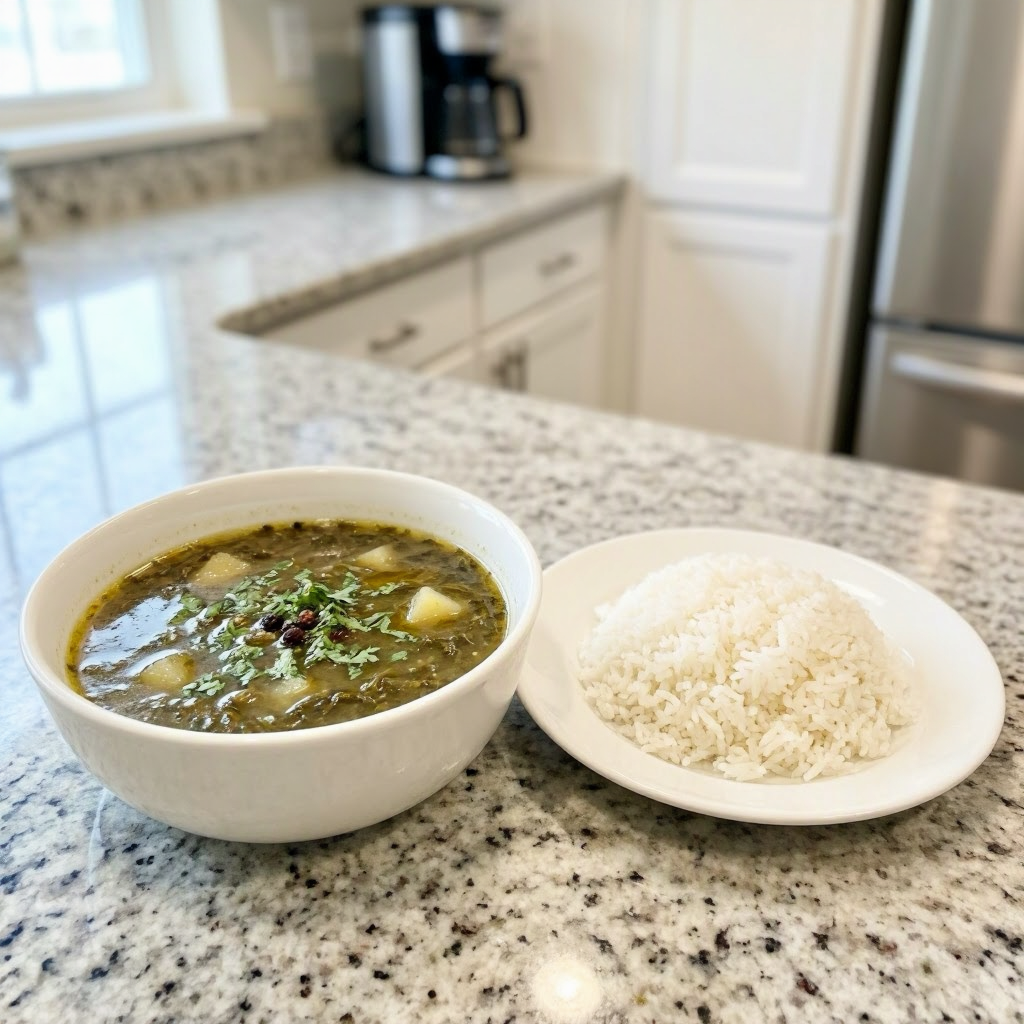
If you ever ask a Nepali what their national food is, half will say daal bhat and the other half will say gundruk. Gundruk is sun-dried, fermented leafy greens, usually mustard greens, sometimes radish leaves or cauliflower leaves, pickled in their own juices in clay pots in the cool of the autumn hill kitchens, then dried in the sun. It keeps for months, smells deeply tangy, and tastes like nothing else: sour, faintly funky, mineral, and the perfect cold-weather counterpoint to plain rice.
Gundruk ko jhol is the simplest and most beloved way to use it, a quick, sour-savory soup with potato, tempered in mustard oil bloomed with methi and timur. There is hardly a household kitchen in the Nepali hills (or in the Nepali diaspora) that does not make this on a chilly evening. It takes 30 minutes, costs almost nothing, and is the closest thing to a hug in soup form that the Nepali kitchen offers.
Ingredients
- 1 cup loosely packed dry gundruk (about 30 g, available at any Nepali / South Asian grocer)
- 2 cups warm water (for soaking the gundruk)
- 3 tablespoons mustard oil
- 1/2 teaspoon methi (fenugreek) seeds
- 1/2 teaspoon cumin seeds
- 1/4 teaspoon jimbu (Himalayan herb), optional
- 2 dried red chilies, broken in half
- 1/4 teaspoon turmeric powder
- 1/4 teaspoon asafoetida (hing), optional
- 1 small red onion, finely chopped
- 1 tablespoon ginger, finely minced
- 3 cloves garlic, finely minced
- 1 fresh green chili, slit lengthwise
- 1 medium tomato, finely chopped
- 2 medium potatoes, peeled and cut into 1/2-inch cubes
- 1 teaspoon ground coriander
- 4 cups warm water (for the soup)
- 1.5 teaspoons salt, or to taste
- 1/4 teaspoon ground timur (Nepali Sichuan pepper)
- 2 tablespoons fresh cilantro, finely chopped, for garnish
Instructions
Soak the gundruk: Place the dry gundruk in a bowl, cover with the 2 cups of warm water, and let it soak for 10 minutes. The leaves will rehydrate into pliable, dark-green strands. Drain (reserve the soaking liquid, it carries good flavor) and roughly chop the gundruk into 1-inch pieces. Squeeze gently to remove excess water.
Toast the gundruk briefly: Heat a dry skillet over medium heat and add the soaked, drained gundruk. Toast for 2–3 minutes, stirring constantly, until it smells nutty and the surface dries slightly. This step deepens the fermented flavor and is the difference between an ordinary gundruk soup and a memorable one. Set aside.
Bloom the mustard oil: Heat the mustard oil in a heavy-bottomed pot over medium-high heat until it just begins to smoke and the raw bitterness lifts off. Reduce to medium heat and add the methi seeds, cumin seeds, jimbu (if using), and broken red chilies. Let them sizzle for 10–15 seconds, the methi should turn dark golden but not black. Stir in the turmeric and asafoetida (if using).
Build the masala base: Add the chopped onion and cook for 5 minutes, stirring often, until lightly golden. Add the minced ginger, garlic, slit green chili, and the chopped tomato. Cook for 4–5 minutes until the tomato softens and the oil starts to bead at the edges.
Add the gundruk and potato: Stir in the toasted gundruk and ground coriander. Cook for 2 minutes so the gundruk picks up the masala. Add the cubed potatoes, stir to coat, and cook another 2 minutes.
Simmer the soup: Pour in the 4 cups of warm water (plus the reserved gundruk soaking water if you like extra depth), add the salt, and bring to a gentle boil. Reduce the heat, cover partially, and simmer for 15–18 minutes until the potatoes are soft and the broth has darkened and turned bracingly tangy. Mash a few potato cubes against the side of the pot with the back of the spoon to slightly thicken the soup. Taste and adjust salt, the sourness of the gundruk masks salt, so do not be timid.
Finish: Stir in the timur, give it one swirl, and remove from the heat. Cover and rest for 5 minutes. The aroma at this point is the smell of every Nepali grandmother’s kitchen in late autumn.
Serve: Ladle hot into bowls. Top with chopped cilantro. Serve as a side soup with hot steamed rice and a spoonful of aloo achar, or as the jhol (broth) component of a daal-bhat-tarkari plate. On cold mountain evenings, gundruk ko jhol is what makes the rice go down.
Variations and notes
- Gundruk ko achar: The dry, no-soup version, toasted gundruk tossed with mustard oil, lemon, sesame, and chili, eaten as a tangy side. Same gundruk, different end use.
- With bhatmaas (soaked soybeans): Add 1/2 cup of soaked black soybeans along with the potato for a heartier, protein-rich version popular in eastern Nepal.
- With pork or buff: A non-vegetarian version sometimes seen in mountain kitchens, add 200 g of cubed pork or buffalo meat and brown it before adding the gundruk; simmer 30 minutes longer.
- Sourness varies by gundruk: Different brands and home-fermented batches vary widely in tang. Taste the broth after 10 minutes of simmering, if you want more sour, add a teaspoon of fresh lemon juice at the end. If too sour for your taste, a small pinch of sugar balances it.
- Mustard oil matters here: This soup is built around fermented funk and pungency. Mustard oil amplifies both. Other oils make a drinkable soup; mustard oil makes gundruk ko jhol.